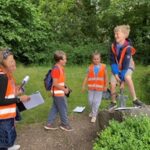
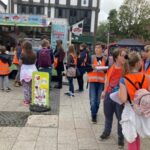
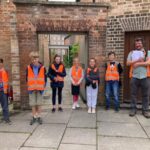
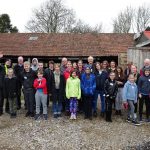
MAYA is back! After 15 months we had our first session after lockdown on Saturday 3rd July! Our celebratory first session was a walk around Taunton Town Centre to discover the hidden history and archaeology of the town. After welcoming everybody back, we split up into three groups which would follow three different routes around the town. The groups rotated throughout the morning so everyone got chance to explore the town’s hidden history.
Starting at the Castle, we tried to spot what still remained of the Medieval town within the modern buildings and roads. We followed the route of where the walls would have been and discovered where the main entrance into the Medieval town was. We talked about how the town had developed and how things had changed so much over time, including burgage plots off the High Street which had eventually turned into slums, and where the town mill had been with its pond and ducking stool!
We also looked in more details at the area around the Castle, including where the keep and the moat would have been. We talked about how this had changed over time and how the River Tone next to the castle had been bustling docks in the nineteenth century with timber mills, wharfs and warehouses. We ended this part of our journey of discovery at St Mary’s Church where we had great fun spotting gargoyles, angels and other weird and wonderful carvings on the outside of the church.
The final discovery tour explored the area around the Market Square in the town centre where an archaeological excavation in 1974 had uncovered evidence of prehistoric and Medieval occupation. We were able to look at plans from the excavation to see what the archaeologists had recorded. We looked some of the more unusual buildings and talked about how electric trams had once run in the town.
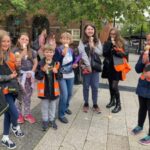
For each different tour we had a photo sheet showing small details on buildings such as carvings and signs and it was fun seeing how many of these we could spot as we explored. But the most exciting part of the day was when Rob who had organised the session told us he had arranged for everyone to have a free ice cream from the stall in the Market Square! This was a special treat to celebrate MAYA starting up again after lockdown! A great big Thank You to Rob for all his hard work organising our first session back and to all our helpers and members for getting MAYA getting up and running again!
Recent Comments