Mick Astons Young Archaeologists (Somerset)

Author: Admin (Page 10 of 16)

6th November – Archaeology and photography.

The job of an archaeologist is to learn about the past by discovering and investigating artefacts that were left behind. We will look at what we are leaving behind today, and how we will be seen in the future, looking at borders and spaces we live in.

10.30am – 12.30pm. The Learning Room, Museum of Somerset.

4th September – How to do a Graveyard Survey!

We will be thinking about how gravestones can be used to find out about the past. You will carrying out a brief graveyard survey by examining a few stones in detail, looking at the design and the inscriptions.

10.30am – 12.30pm.  Wembdon Road Cemetery, Bridgwater.  Parking/drop off details to follow.


Visit to Dawe’s Twine Works – 7th March 2020

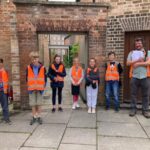
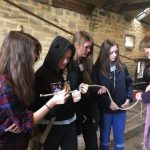
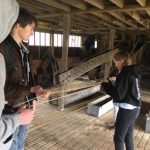
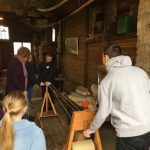
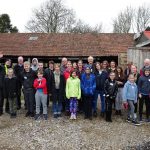
For our March session we went on a visit to Dawe’s Twine Works at West Coker, the only surviving rural twine works with its original machinery in England.  We started out with a talk about the history of the twine works and then split into two groups to look around the site.  We saw how spun flax was twisted into twine and then used twine to make our own pieces of rope.  It was fascinating to see the old equipment and machinery being used.

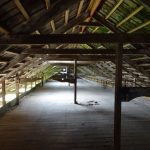
The staff at the twine works then started up the 1927 Shanks diesel engine which powers all the machinery at the works which is all still in perfect working order.  We went upstairs into the huge 100m rope walk and saw how the twine was made on an industrial scale.  We learnt how it was dipped into preservative made from boiled animal guts (!) and had a go at doing this on a much smaller scale but using wall paper paste instead!

One room had a lot of old ledgers and books, cabinets and desks donated by another similar local twine works when it shut down.  Underneath this room was a huge reservoir of water which was used by the original steam engine and also to wash the twine.  We could see down into this through a glass window in the floor.  There was a fake human skeleton down there too which caused a lot of amusement, as did the old outside toilet which had an old shop manikin sitting on it!

This was a really interesting visit to a fascinating site and we all thoroughly enjoyed it.  The twine works volunteers made us feel extremely welcome and for a small donation offered us lunch, drinks and cakes.  A big thank you to Ross, Chris and all the other people who made this such and enjoyable visit.

Viking crafts and spinning at the Museum of Somerset – 1st February 2020

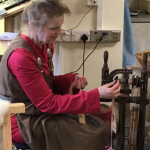
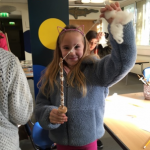
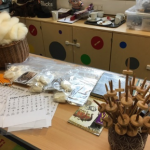
Our February session was run for us by Sue Coates who is a member of the Spinning Guild and demonstrated how to use spinning equipment through the ages.  Sue started off by showing us Neolithic stick spinning and then went through all the different methods right up to the modern spinning wheel.  Sue then concentrated particularly on Viking spinning methods and she had brought along some beautiful lead spindle whorls dating to Viking times.  She also had an incredible range of genuine and replica spinning equipment and an array of different fleeces too.  She showed us how to card the wool and then spin it using a spindle and spindle whorl.

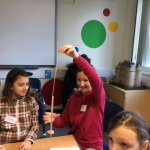
After the break, we had a go at actually spinning ourselves!  It wasn’t as easy as Sue made it look but some of the MAYANS managed to get the hang of it quite quickly.  We were able to take the spindles and fleece home so we could continue to practice.

A big thank you to Sue for such a different and interesting session.

Roman Curse Tablets at the Museum of Somerset – 4th January 2020

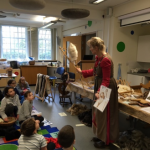
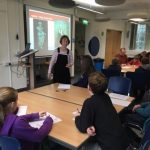
MAYA started off 2020 in a magical, mystical way as our first session of the year was about Roman Curse Tablets! The session was led for us by Chris Webster, who started out with a PowerPoint presentation all about Roman gods and goddesses… what they looked like, what their special symbols were and what they were the god or goddess of.

After this Chris told us about the mysterious Roman Curse Tablets that are found in temples like the one at Bath. These were written on behalf of someone who had had a crime committed against them, asking a particular god or goddess to wreak vengeance on the person who had wronged them. They were usually inscribed onto thin lead sheets and thrown into the sacred spring.

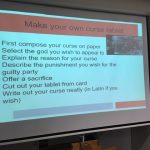
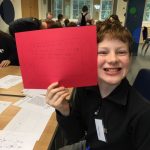
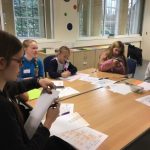
We then made curse tablets of our own out of coloured card. The MAYANS were very inventive about who they wanted to curse and why! I wouldn’t like to get on the wrong side of some of our members! We ended this fascinating session with a quiz about Roman gods and goddesses.

A big thank you to Chris for creating such an unusual and interesting start of the year!

MAYA Christmas Party at the Museum of Somerset – 7th December 2019

MAYA celebrated Christmas Roman style this December! We started out with a PowerPoint presentation about the Roman Festival of Saturnalia which used to take place on 17th -23rd December. We leant about how we could celebrate the Festival at home with appropriate decorations, presents etc.

After this we made special amulets called bullas which Roman children used to wear until they became adults. These were a small pouch that children wore round their necks, and inside they put a special lucky charm. At our MAYA Christmas session we put small wooden Christmas decorations inside that could also be hung on our Christmas trees.

After this we had our usual Christmas party with lots of food, crackers and party poppers, followed by pass the parcel and lucky dip. It’s hard to believe another year has gone by and we have a lot of great sessions planned for 2020! Thank you to everyone who has supported MAYA over the past year and to all our members and helpers for making it so successful and fun!

« Older posts Newer posts »

© 2026 MAYA

Theme by Anders NorenUp ↑